
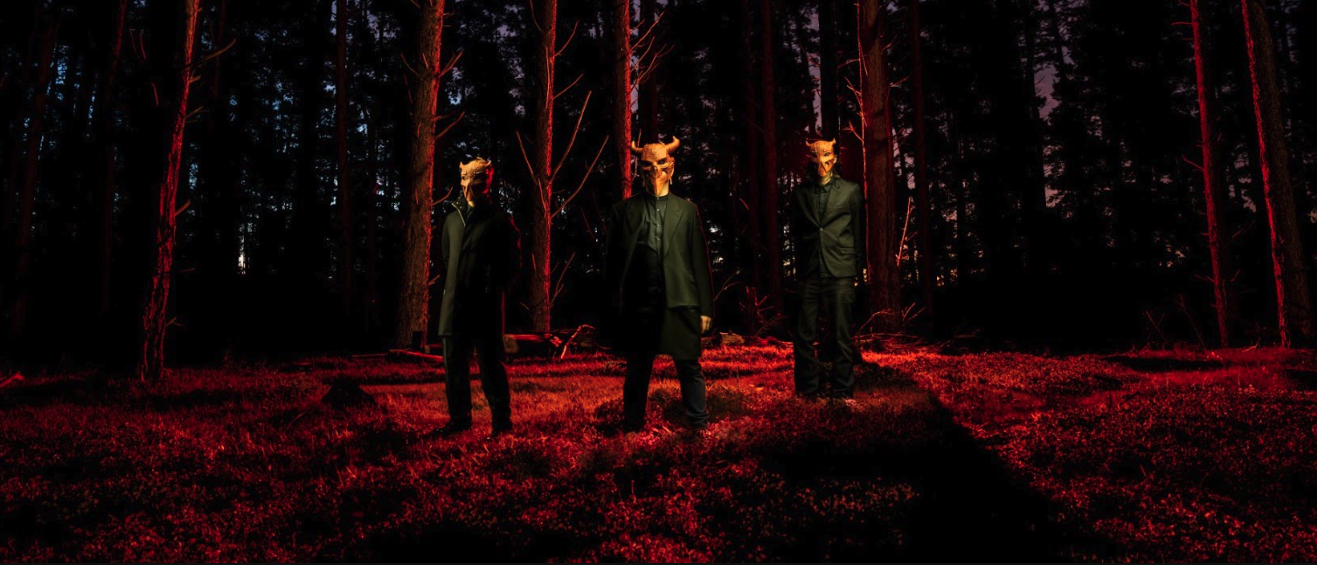
The Only Objects
Talk An Excess of Hauntings and the Art of the Album
The idea of the future we were promised, and the things that remain after that future fails to arrive, sits at the heart of An Excess of Hauntings, the latest album from The Only Objects. Moving between hauntology, thermodynamics, Cold War technology, personal memory and the enduring power of the physical album, the record is an ambitious exploration of things that refuse to disappear. From The Magnetbahn and its abandoned vision of futuristic transport to Access Will Be Retained and the persistence of things that theoretically should be gone, The Only Objects build a world where the personal and conceptual constantly overlap. The album also marks a progression from the raw vulnerability of their debut The Nostomanic Cypher, embracing something stranger, more enigmatic and distinctly their own.
The idea of a 'haunting' runs throughout the album. What does a haunting mean to you beyond the supernatural?
There are, I suppose, two answers to that: one conceptual, one personal.
A conceptual haunting relates to futures that never came to pass – things promised, but undelivered. I see that very much as a societal burden. I grew up at a time when we were told how bright the future was going to be, and, well, we’re still waiting for that as we live through almost constant crises.
The personal reading is similar, but much more visceral: unkept promises that take up residence in your brain and return, over and over again.
The record deals with lost futures and unrealised possibilities. How did those ideas begin to take shape while you were writing it?
I didn’t actually realise that we had hit on this theme at first. It was only once we had arranged all the songs that I took a step back and realised there was a thread running through everything we had written.
It wasn’t necessarily a conscious piece of assembly, but it wasn’t surprising to me either. I have concepts that I tend to get fixated on, and they end up leaking out into the art that I’m making.
The Magnetbahn feels like a particularly interesting title within that world. What does the song represent, and how did its sound develop?
It’s very much the centrepiece of the album, and I think it’s the greatest evocation of the central thesis.
Fundamentally, it covers the history of the M-Bahn, a piece of futuristic magnetic levitation technology that was built in Berlin during the Cold War, only to be abandoned. Another undelivered future. It’s also playing in that conceptual/personal contradiction when it switches to a much more emotive call in the bridge.
The song was written fairly early in the process, and we were playing around with a more classic prog-rock kind of sound. A lot of the development came from returning to tones that were familiar and powerful in my youth – in this case, Pink Floyd. The guitar solo is certainly me trying to stumble through an evocation of Dave Gilmour.
As with all of our work, it ended up becoming its own thing, but it’s rooted in something deeply familiar.
Access Will Be Retained seems to play with ideas of persistence and things remaining available even when they should have disappeared. How does that connect to the wider concept of the album?
Access is an interesting one, because on a very surface level it’s about a thought experiment from 1867 called “Maxwell’s Demon”, which purports to break the Second Law of Thermodynamics. In fact, there’s a bit of a thermodynamics thread running through the record if you look to The First Law as well.
The notion of things persisting when they should have disappeared is deeply hauntological in nature, which is… our entire statement, really.
I’d actually never thought of Access in quite those terms before – so thanks for the heads up!
The physical release becomes an artwork in its own right, with Jesse Miles' design, Denis Smith's photography and hidden narrative fragments. Why was it important to make the listener physically engage with the record?
I’m a big believer in the concept of the “total work of art”: that every element of the work should speak to the whole.
So while the digital, recorded, streaming version is absolutely the album, you’ll get a lot more out of it by really digging into the physical object as well. We deliberately loaded it with layers of narrative and metanarrative, jokes, footnotes and red herrings. There’s a story to be uncovered there if you’re willing to look for it.
It’s a love letter to the physical album, really. Some of my most foundational experiences with music involved listening intently to an album on headphones in front of the stereo, eyes locked on the physical object.
We want to bring back some of that dynamic: art that demands your attention, rather than just existing as wallpaper in the background.
You’ve described the album as going “deeper, weirder, more ambitious” than your debut. Looking back at The Nostomanic Cypher, what did you want to leave behind, and what did you want to take further with An Excess of Hauntings?
I’ve made no bones about the fact that The Nostomanic Cypher was a breakup record.
The production on that album starts with big, dramatic, shiny bombast before steadily getting more ramshackle, eventually ending on a largely spoken-word piece called The Happiest Thought, which was the most personal, exposed and raw piece of writing I’ve ever done.
Really, where do you go after that? Once you’ve laid it all out, bare and bloody, what’s left?
It also coincided with the band changing lineup and the sound shifting. I became more interested in really playing into our weirdness, into being unapologetically ourselves.
I think what we left behind was being quite so raw and exposed. There’s still a core of personal experience to many of the songs, but in a way that’s thornier, more difficult and more enigmatic.
What we took further was literally everything else – more strange tangents, more loaded meanings, more conceptual detours.
An Excess of Hauntings is, at the end of the day, the most “us” that an album can be.