
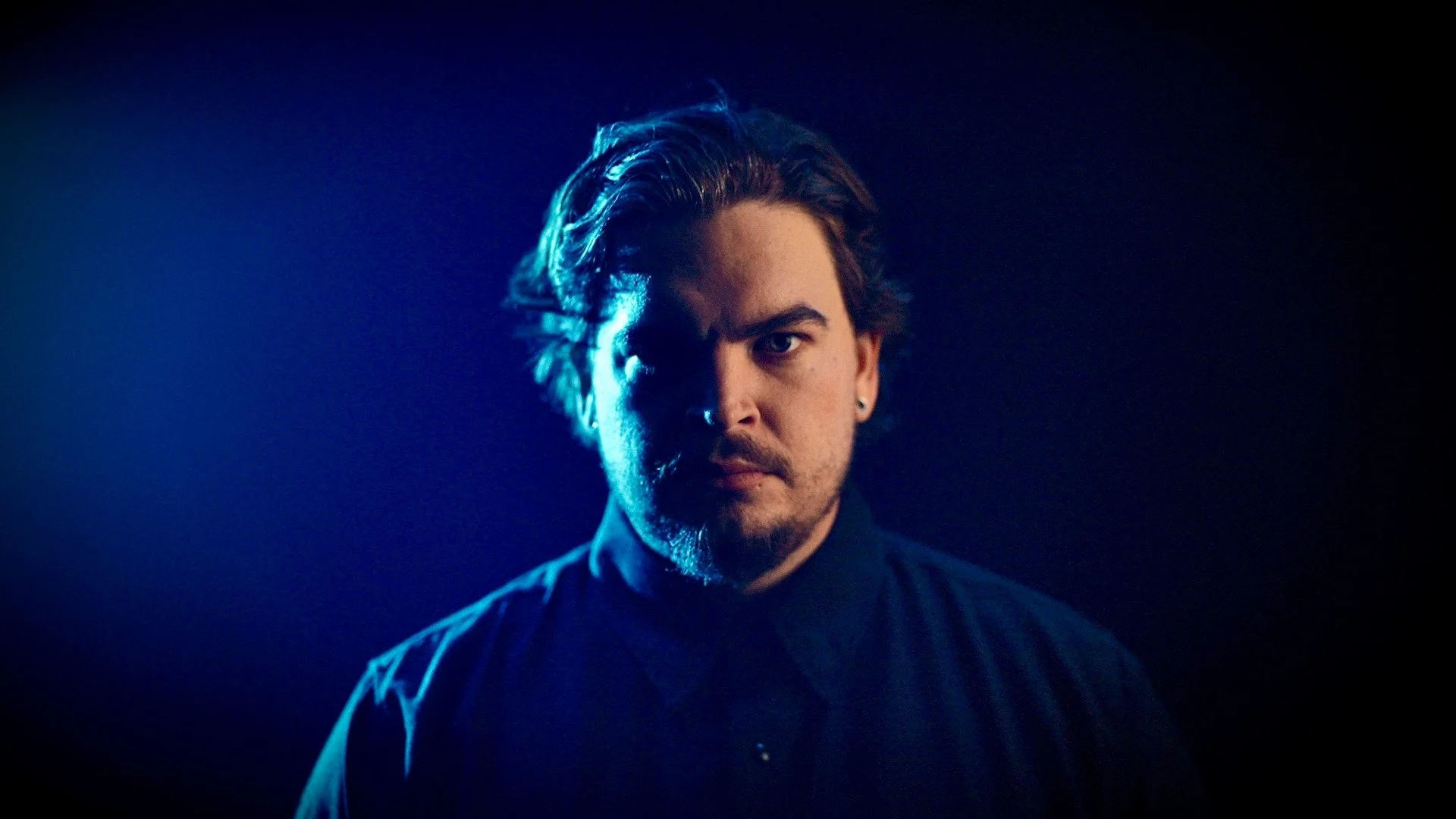
Killian Faye
Breaks Down Self-Doubt with Powerful New Single 'Break It Down'
There’s a cinematic intensity running through Killian Faye’s latest single, ‘Break It Down,’ but beneath the soaring guitars and explosive production lies something deeply personal. Written as an exploration of self-doubt, anxiety and the relentless pressure we place on ourselves, the track transforms internal battles into an empowering anthem of resilience. Operating as a true independent artist, Killian Faye has taken ownership of every aspect of the project, from songwriting and production through to the visual world surrounding the release. The result is an immersive experience where music and imagery work together to tell a story of isolation, confrontation and ultimately finding strength within yourself.
Break It Down feels like a conversation with the voice in your own head. Can you talk about the emotions and personal experiences that shaped the song, and what writing it helped you understand about yourself?
Break It Down came from that place where you feel like your own mind is working against you. It’s about self-doubt, pressure, frustration, and the feeling of constantly questioning whether you’re doing enough or whether you’re good enough. I think a lot of people carry that internal voice around with them, even if they don’t always talk about it openly.
For me, the song was shaped by those moments where you feel stuck between wanting to push forward and wanting to give up. It’s not necessarily about one specific event, but more about the build-up of thoughts and expectations over time. Writing it helped me realise how much pressure I put on myself, but it also helped me understand that those thoughts don’t have to control the outcome. The song became a way of taking that internal chaos and turning it into something powerful.
Throughout your music there's a balance between vulnerability and strength. Rather than simply documenting difficult moments, your songs seem to focus on surviving them. Why is it important for you to leave listeners with a sense of hope rather than despair?
I think it’s important because life is never just one thing. It can be brutal and beautiful at the same time. You can be going through something really heavy, but there can still be moments of strength, meaning, or even clarity inside that. I don’t want the music to pretend everything is fine, but I also don’t want it to leave people feeling like the darkness is the final answer.
For me, vulnerability and strength are connected. Being honest about pain doesn’t make you weak; sometimes that’s where the strength starts. I want the songs to acknowledge the hard parts of life, whether that’s anxiety, heartbreak, pressure, or feeling lost, but I also want them to remind people that those moments can be survived. Even when life feels chaotic, those experiences still shape who we become, and there can be something beautiful in that.
You're effectively a one-person band, handling the songwriting, recording, production, performance, and visual direction yourself. How has taking ownership of every creative decision shaped your identity as an artist, and what challenges come with wearing so many hats?
Being a solo project has given me a lot of creative freedom. With Break It Down, I funded the release myself, recorded and produced the foundation of the track myself, performed the instruments and vocals, and developed the ideas behind the visuals and overall creative direction. It was a big achievement for me, and I’m proud that I was able to build something from the ground up and keep it close to the original vision I had in my head.
The biggest challenge is probably how time-consuming it can be. When you’re handling so many parts yourself, you have to make a lot of decisions alone, and you don’t always have someone there to bounce ideas off or give honest feedback in the moment. That’s one of the things collaboration can be great for; it brings in fresh perspective and a different kind of energy.
I’m definitely open to bringing other people into the world of Killian Faye, whether that’s musically, visually, or creatively. At this stage, though, building the foundation myself has helped me understand what I want the project to be. It’s taught me to trust my instincts, back my ideas, and keep pushing the vision forward.
Sonically, Break It Down moves between quiet, intimate moments and explosive, cinematic sections. How did you build that emotional dynamic during the production process, and what were you hoping listeners would feel as the song unfolds?
I wanted the song to feel like pressure building inside your head. The quieter moments are meant to feel more internal and isolated, almost like you’re sitting alone with your thoughts. Then when the bigger sections hit, I wanted it to feel like all of that tension finally breaking out.
A lot of the dynamic came from layering and contrast. I wanted the verses to feel darker and more contained, then have the choruses open up with bigger guitars, heavier drums, and a wider emotional release. I’ve always been drawn to music that feels cinematic and larger than life, so even though the song was created in a bedroom, I approached it like it belonged in a much bigger space. I wanted listeners to feel the weight of that internal pressure, but also the release that comes from facing it instead of hiding from it.
The visual world surrounding the single mirrors the themes of isolation, pressure, and release. How do you see the relationship between your music and your visual storytelling, and how involved are you in developing that creative direction?
For me, the visuals are another way of telling the same story as the song. I was very involved in the creative direction for Break It Down, from the overall mood and lighting to how the performance develops throughout the video. I had a lot of visual influences from other music videos, but I wanted to shape them into something that felt connected to the emotion of this song specifically.
The blue lighting was a deliberate choice. Around Australia, there are blue-painted trees connected to mental health awareness, and that idea stayed with me. Blue felt like the right colour for isolation, internal struggle, and being trapped inside your own head, but it also carries a sense of hope underneath it. I didn’t want the video to just look dark for the sake of it; I wanted the colours to mean something.
As the video progresses, the performance becomes more intense and more confident. At the start, it feels more restrained and unsure, almost like trying to hold everything in. Then the visuals become more congested, heavier, and noisier, which mirrors the pressure building in the song. The white scene with the mirror represents finally having to face yourself directly, without distractions. Breaking the mirror is that moment of release, breaking through the self-doubt rather than being controlled by it.
By the end, the amber lighting represents clarity, confidence, and control. It’s not saying everything is suddenly perfect, but it is about reaching a point where you’re no longer completely trapped by those thoughts. That relationship between sound and visuals is really important to Killian Faye. I want the music videos to feel like they expand the emotional world of the songs, not just sit beside them.
Your Spotify bio speaks about creating music for people navigating anxiety, heartbreak, and manipulation. As Killian Faye continues to evolve, what conversations do you hope your music starts, and what kind of impact would you like your catalogue to have on listeners years from now?
I hope Killian Faye can start honest conversations about the full range of human experience; not just the heavy parts, but the beautiful and joyful parts too. Anxiety, heartbreak, self-doubt, and manipulation are definitely themes I want to explore, because they’re real things people go through, but I don’t want the project to be limited to darkness. Life has light and shade. It can be painful, chaotic, beautiful, exciting, and full of moments that make you feel completely alive.
That’s what I want Killian Faye to capture: the raw beauty of life, in all its extremes. Sometimes the songs might come from a place of pressure or emotional struggle, and other times they might come from hope, confidence, love, or the feeling of pushing forward. I want the music to feel honest, but also powerful.
Sonically, I want people to come to Killian Faye for big, emotional rock music; driving guitars, cinematic moments, raw vocals, and that sense of scale that a lot of 2000s rock had, but pushed into a more modern space. I love music that feels like it’s reaching for something bigger, and that’s the kind of catalogue I want to build.
Years from now, I’d love for people to return to these songs when they need something that makes them feel understood, but also energised. Whether someone is going through something heavy or just wants to feel that rush of powerful, emotional music, I want Killian Faye to be a place they can come back to.