
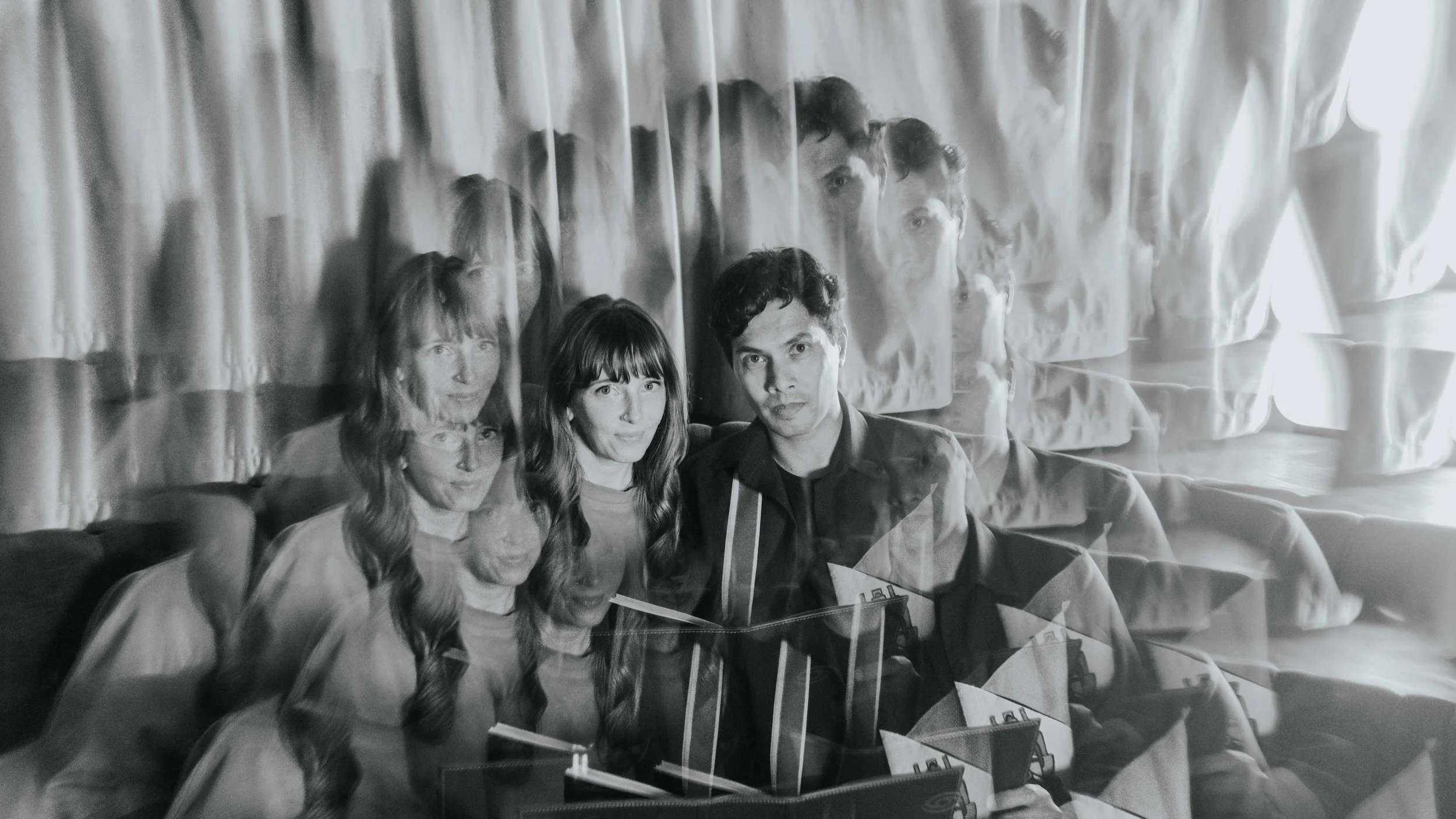
Duel Native
Always Imperfect and the Art of Staying Human
Duel Native returns to the idea of Always Imperfect not as a fixed statement, but as something that continues to expand with time, technology, and self-reflection. In a landscape where over 100,000 tracks are uploaded daily and AI is reshaping how music can be made, their perspective cuts through the noise—centred on process, honesty, and human connection. From rediscovering creativity in a home studio to experimenting with collaboration and live performance, this conversation unpacks what it means to stay real in an increasingly artificial world.
Since we last spoke about Always Imperfect, where does that idea sit for you now?
If anything, the idea of Always Imperfect is more present now, even more than when we released the EP. I was working on a track earlier, and I noticed in DAW software that there's a function called "humanise" which essentially exists to make things that are too rigid )either all the same volume, or the same tempo or all the same rhythm), and actually add in some human "error" - as in using the computer to generate variation. I find that fascinating because we don't like hearing robotic sounds; we can detect that as humans, even though it might be very subconscious.Yeah, I think the idea of Always Imperfect keeps growing on me if anything.
What have you been uncovering about your relationship with releasing music lately?
Put it this way, there's roughly one hundred thousand new tracks delivered to streaming services every single day, and more than a third of them involve AI. That to me is fascinating because it makes you ask: 'What does it mean to release a song now when it's just another song in 100,000 that have been released on any given day?' It's got to come back to why you're releasing music in the first place.
For me, it's to, it always has been to express myself and to share music, and to hope it can resonate with someone else and that we can make that connection. And so, with what's been happening in the world in terms of both politically and also in terms of the use of AI, human connection just becomes more and more important to me, and releasing music is actually a part of that, you know, human connection that we can have.
Where does generative AI fit into your thinking as an artist right now?
I've looked into lots of different ways that it can be used, you know, whether it's as simple as help with lyric writing or prompts that you know, gives a starting point for the engine to write the whole song for you - and and everything in between. And I guess It's a tool which you can use to whatever extent that you want to use it. For me, I don't want to miss out on the process of investigating what's deep within my own subconscious and letting that be expressed outwards, and that's what being an artist is for me.
I don't mind using AI essentially as a kind of bandmate. For example, if I'm making a demo I'll get an AI drummer that follows what I've written on the software. It's not something that I really want to take beyond that. It's less about the product and more about the process. And for me, I don't want to miss out on the opportunity to (albeit slowly) generating something myself., and enjoying that, yeah!
What has your creative process been looking like recently?
I've been spending a lot of time in my home studio. And that has been really lovely, because I haven't had this time for many years, because I've been running around and doing so many different things, and now, it's quite scary because I've got no excuse enough for not doing the work, not sitting down or getting the instrument or practising my vocals, whatever it might be. Some of my creative process has been journaling, and even going back through old journals, because sometimes there'll just be a sentence that could end up as a lyric, or an album title in something that I had written, like, several years ago.
I'm just trying to find the best time of day to do that. You know, in Chinese wisdom, different times of day have particular benefits. So a lot of mental clarity is actually in the morning - deep focus between 9 and 11a, for example, and then later in the day it might be more about administrative or lighter tasks. That's useful to explore, because I think everyone finds their own rhythm, finds their own routine or ritual. And I'm sort of still finding mine in many ways.
When you performed ‘Clouds’ at Pleasure Club with your bandmate and partner Erin, what were you exploring in that live setting?
We were exploring what it's like to take a song that had much more instrumentation, and stripping it back to just the guitar and vocals - and allowing the audience to form part of the experience by giving them percussion instruments. That creates a very active setting - a live dialogue between, you know, performer and audience, where the audience become the performers as well. And it can always go wrong, which is quite funny. We like humour.
Who or what are you looking to collaborate with next?
I've been in touch with a couple of orchestras around the world, string quartets, some classical writers, and then also some rappers! I can't say much more until something actually gets fixed, but there'll be joint sort of projects, which is really exciting to me. Sometimes you need the power of multiple audiences and you need to open yourself up to creative energy that is totally unexpected and different from your own.
What themes are pulling your writing forward right now?
Hopefully this doesn't offend you... but I've been thinking a lot about rich people. Like, people who are born into privilege and how much I've always really had a strong distaste for them, and that seems to be subconsciously coming out in a lot of my lyrics!