
DL Gade
Opens Up About Heartbreak, Healing & The Story Behind 'Wish You Well'
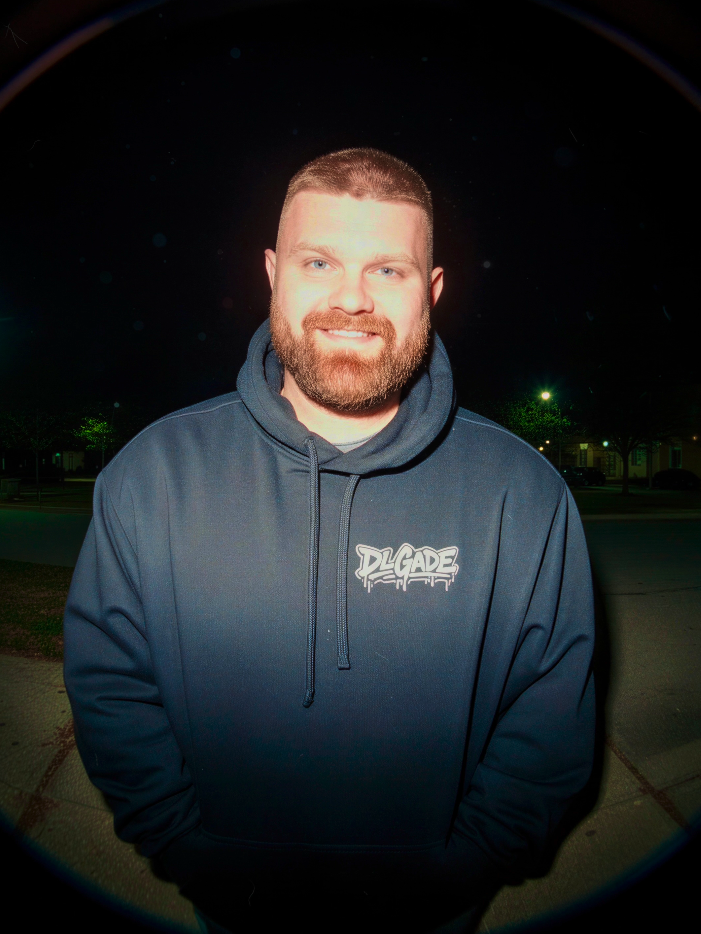
With his latest single 'Wish You Well', Melbourne hip hop and R&B artist DL Gade delivers his most personal release to date. Written during a 20-hour flight home from Denmark following the end of a long-distance relationship, the track captures the raw emotions of heartbreak as they unfolded in real time before ultimately arriving at a place of acceptance and hope. We caught up with DL Gade to discuss the story behind the song, embracing vulnerability in his songwriting, and why sometimes the strongest thing you can do is wish someone well.
Wish You Well was written during a 20-hour journey from Denmark back to Australia after the breakdown of a long-distance relationship. Can you take us back to that moment and describe what was going through your mind as the song began to take shape?
DL Gade: It was a pretty surreal experience. Up until that point, there had been so much happening that I hadn't really stopped to process everything. Then suddenly I was on a plane for more than 20 hours with nowhere to go, nothing to distract me and nothing but my own thoughts.
I found myself replaying the relationship, thinking about the good moments, the challenges and how things had ended. Throughout the journey I went through what felt like every stage of grief - sadness, anger, confusion, bargaining and eventually acceptance. As those emotions came and went, I started writing them down.
Some of the lyrics were written while I was still trying to make sense of everything. By the time I landed back in Australia, the foundation of 'Wish You Well' was already there. In many ways, the song became a journal of that flight and the emotions I experienced along the way.
One of the most compelling aspects of the song is how it documents the different stages of grief in real time. How conscious were you of capturing those shifting emotions while writing, and did revisiting those feelings during the recording process bring any new perspectives?
DL Gade: To be honest, I wasn't consciously trying to document the stages of grief at the time. I was simply writing down what I was feeling at that moment. Looking back, it's easy to see those different emotions throughout the song, but when I was writing it, I was just trying to make sense of what I was going through. That's probably why the song feels so authentic - nothing was planned or forced.
When it came time to record the song, I was in a much different headspace. Enough time had passed that I could look back on the situation with a bit more perspective and clarity. Recording it almost felt like revisiting a journal entry from a difficult period in my life.
There were definitely moments where I remembered how raw those emotions were, but it also reinforced how far I'd come since then. I think that's one of the reasons the song ends on a more positive note - by the time I recorded it, I had reached a place of acceptance and genuinely wished the other person well.
Rather than focusing on blame, 'Wish You Well' arrives at a place of empathy and acceptance. In a culture where breakup songs often paint one person as the villain, why was it important for you to tell a more nuanced and balanced story?
DL Gade: I think most relationships are more complicated than having a hero and a villain. While there was definitely hurt and heartbreak, it wouldn't have been honest for me to place all the blame on one person.
The relationship meant a lot to me, and despite how it ended, I'm still grateful for the good times we shared. Ultimately, 'Wish You Well' is about reaching a place of acceptance and genuinely wanting the best for someone, even when they're no longer part of your life.
Vulnerability can be one of the most powerful tools in songwriting, but it can also be uncomfortable. Did sharing such a personal experience through music ever feel daunting, and how did you decide which parts of the story to keep private versus include in the song?
DL Gade: I've always found it easier to write about things I'm genuinely experiencing than to make something up. The challenge wasn't deciding whether to be vulnerable - to be honest it was deciding how much detail to include.
I wanted the song to focus on my emotions and journey rather than the specifics of the relationship itself. Some parts of the story belong to me, some belong to someone else, so it was important to be respectful while still being honest about what I was feeling.
Your catalogue has explored themes ranging from ambition and humour to love and self-belief. Where does 'Wish You Well' sit within your broader artistic journey, and has creating this track changed the way you approach songwriting moving forward?
DL Gade: 'Wish You Well' is probably the most personal and vulnerable song I've released. A lot of my music has elements of humour, confidence or storytelling, but this track is really just me being completely honest about what I was going through.
It's reinforced that authenticity is important in songwriting, but it hasn't necessarily changed my approach. I still want to explore different sounds, themes and styles because that's part of what I enjoy about making music. If anything, 'Wish You Well' has simply added another layer to who I am as an artist and shown a side of me that listeners may not have heard before.
Looking back now with some distance from both the relationship and the writing process, what does 'Wish You Well' mean to you today, and how do you hope listeners who are navigating their own heartbreak connect with the message behind it?
DL Gade: To me, 'Wish You Well' is proof that even the toughest moments can lead to growth. If you've ever had your heart broken, you'll probably hear a piece of your own story in this song.
It's raw, honest and written in real time as I was living it, so it has probably become my favourite song I have released to date. More than anything, I hope people walk away knowing that heartbreak doesn't last forever—and sometimes the strongest thing you can do is wish someone well and keep moving forward.music internationally which is a big goal for me.